No products
To be determined Shipping
0,00 € Total
Blog Categories
Latest Posts
Caring for a Tahitian pearl involves simple but regular steps. This naturally occurring gem has a delicate nacre that is sensitive to friction, harsh substances, and temperature fluctuations. By following a few specific guidelines, you can preserve its luster for many years.
A Tahitian pearl is one of the most prized cultured pearls due to its deep luster and natural beauty. However, it requires special care, as it is more fragile than metal or hard stones. Proper care of your pearl therefore begins with prevention, followed by proper cleaning after wearing it.
The tips below will help you protect your pearl jewelry on a daily basis, whether it's a necklace, a bracelet, or bead jewelry strung on wire. The goal is simple: to preserve the beauty of the mother-of-pearl, minimize deterioration, and avoid common mistakes.
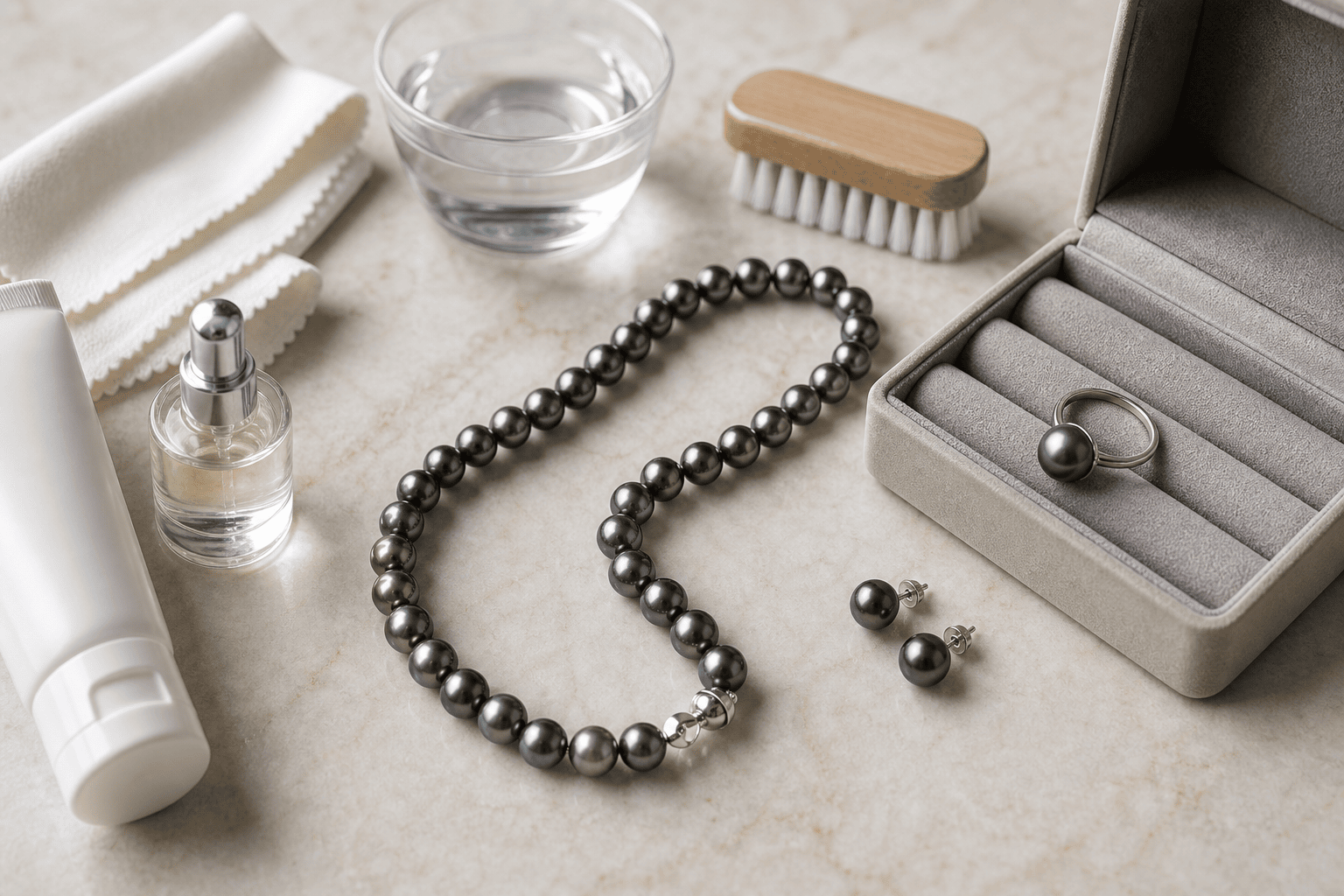
The first rule of caring for Tahitian pearls is to keep them away from anything that could damage the nacre. Cosmetics, perfume, hairspray, detergents, bleach, chlorine, alcohol, and vinegar can dull the surface and alter the pearl’s appearance. Even repeated, minor exposure will eventually leave marks on the material.
You should also be careful with chlorinated water, saltwater, and certain everyday activities. These factors don’t always cause immediate damage, but they gradually weaken the Tahitian pearl and can dull its luster. The safest approach is to put on your jewelry after applying your skincare products, never before.
A good tip is to put on your Tahitian pearl last, after you’ve finished getting ready, and to take it off first at night. This simple habit minimizes contact with chemicals and helps preserve the nacre. It’s one of the most effective ways to protect pearl jewelry on a daily basis.
Mother-of-pearl is a living material in the mineral sense of the term: it reacts to its environment. Chemicals can make it appear duller, discolor it, or create a dull film on its surface. In some cases, the damage becomes permanent, and it is no longer possible to restore its original appearance.
Don’t assume that simply rinsing the pearl will be enough to correct the effects of repeated exposure. A cultured pearl deserves a preventive approach, because the beauty of its surface depends above all on how well it is cared for. It is therefore better to avoid harsh products than to try to repair the damage later.
The best way to clean your Tahitian pearl is very simple. After wearing your Tahitian pearl, carefully remove it and wipe it with a soft, clean cloth that is slightly damp if necessary. This removes sweat, skin oils, and invisible residues that can dull the surface.
You must be gentle and avoid rubbing too hard. Mother-of-pearl does not respond well to abrasive actions, stiff brushes, or repetitive movements. Regular, gentle cleaning is much better than occasional, more vigorous cleaning.
If a slightly more thorough cleaning is necessary, use a very small amount of lukewarm, non-chlorinated water. Some professionals allow the use of a very small amount of mild soap, but this should be done only in exceptional cases. In any case, avoid scented products, solvents, and solutions that are too harsh.
Scratches often occur due to contact with other jewelry, especially when that jewelry contains metal, hard stones, or protruding elements. Tahitian pearls can also be scratched by rough handling, a bump against furniture, or repeated friction inside an overfilled jewelry box. Caution is therefore essential.
To minimize this risk, be careful when storing your pearl jewelry with other pieces. Storing it separately protects the mother-of-pearl and prevents surface scratches. It’s a simple tip, but a very useful one if you often wear cultured pearl jewelry.
How you store a Tahitian pearl is just as important as how you clean it. A pearl left haphazardly in a box with other jewelry is exposed to friction, impacts, and scratches. Ideally, you should use a jewelry case, a soft pouch, or a lined box, kept separate from the rest of your jewelry.
You should also avoid places that are too dry, too hot, or exposed to direct sunlight. Pearls contain a natural amount of moisture, and an excessively dry environment can weaken them over time. Stable storage conditions provide better protection for the mother-of-pearl and settings.
Wearing a pearl regularly also has its benefits. A pearl that is worn often generally retains its appearance better, as natural contact with the skin helps maintain its luster. This does not mean that a cultured pearl must be worn all the time, but that frequent wear is still beneficial.
On the other hand, leaving a piece of jewelry unused for very long periods of time isn’t ideal if the environment is dry. It’s not a matter of magic, but of preservation. A Tahitian pearl simply thrives in stable conditions and when worn regularly.
It’s best to remove the pearl before showering, taking a bath, going to the pool, or swimming in the ocean. Chlorine, salt, and prolonged exposure to moisture can damage the mother-of-pearl and, in some cases, weaken the setting. Even brief but repeated exposure can eventually cause problems.
This advice also applies to household chores, intense exercise, and any situation involving heavy sweating. Sweat, combined with heat, can leave marks and diminish the surface’s appearance. To protect the beauty of your jewelry, you should plan ahead for these situations.
It’s also a good idea to remove your pearl before going to sleep. Movement during the night increases friction and the risk of the string or clasp breaking. This is a simple precaution that extends the life of your pearl jewelry.
Proper care isn't just about the mother-of-pearl. The thread, clasp, and setting also need to be checked, especially for a cultured pearl necklace strung on silk. Over time, the thread can stretch, wear out, or get dirty.
Having a jeweler check the assembly helps minimize the risk of breakage. Depending on how often it’s worn, periodic restringing may be helpful, especially if the necklace is worn frequently. This advice also applies to certain bracelets, which are often subjected to more frequent strain.
Some people believe that you should treat a pearl with olive oil or monoi to restore its luster. In reality, these substances attract dust and can leave an unsightly film. They are no substitute for proper cleaning and offer no lasting benefits.
It is therefore best to use simple care routines rather than hit-or-miss methods. Tahitian pearls do not need to be oiled; above all, they need to be protected, carefully wiped clean, and stored under the right conditions. A natural approach is always the best choice.
The myth that pearls die is an exaggeration. A cultured pearl does not disappear just because it is kept in a jewelry box for a few weeks or months. However, if it is stored improperly, becomes too dry, or is repeatedly exposed to harsh conditions, it may lose its luster or develop cracks.
In other words, the problem isn’t that the jewelry isn’t worn, but rather poor storage conditions. A piece of jewelry that is properly stored in a stable environment can last for years without any issues. This is where Tahitian pearl care really comes into play: fewer complicated steps, more consistency.
With these tips, you can easily maintain the beauty of your Tahitian pearl in your daily life. Gentle cleaning, storing it separately, and being mindful of the products you use and any friction are often enough to extend its lifespan. By taking care of the mother-of-pearl and the setting, your jewelry will retain its natural luster for longer.
 en
en 




 Comptoir des Monoï
 Monoï Royal de Tahiti
 Reva de Tahiti
 The Tahitian Wave
 NaoNao Xtreme
 Hei Poa
 Monoï Tiki Tahiti
 Tevi Tahiti
 Tahitian Tatou
 Papeete Market Pareo
 Heïva
Heïva South Pacific Ingredients
 Vahine de Tahiti
 Ōteo
Ōteo Bora Bora Sea Salt
 Naturado in Provence
 Teahupoo
 Miss Monoi
 In the Wind of the Islands
 Comptoir des plantes polynésiennes