No products
To be determined Shipping
0,00 € Total
Blog Categories
Latest Posts
The pareo is one of the most versatile pieces of clothing in Tahiti. Lightweight, colorful, and easy to carry, it can be transformed into a skirt, a dress, or a beach accessory in just a few simple steps. Knowing how to tie a Tahitian pareo saves time while ensuring a harmonious look.
Whether you’re strolling along the water’s edge, dancing the Ori Tahiti, or putting together a more formal outfit, tying it the right way makes all the difference. The choice of fabric, the length, and the position of the knot directly influence the fit and style. Here are the most useful techniques for wearing a pareo with elegance.
The techniques are easy to follow, even for beginners. With a few simple tips, it’s easy to style a pareo for any occasion, from a beach look to a more traditional Tahitian style.
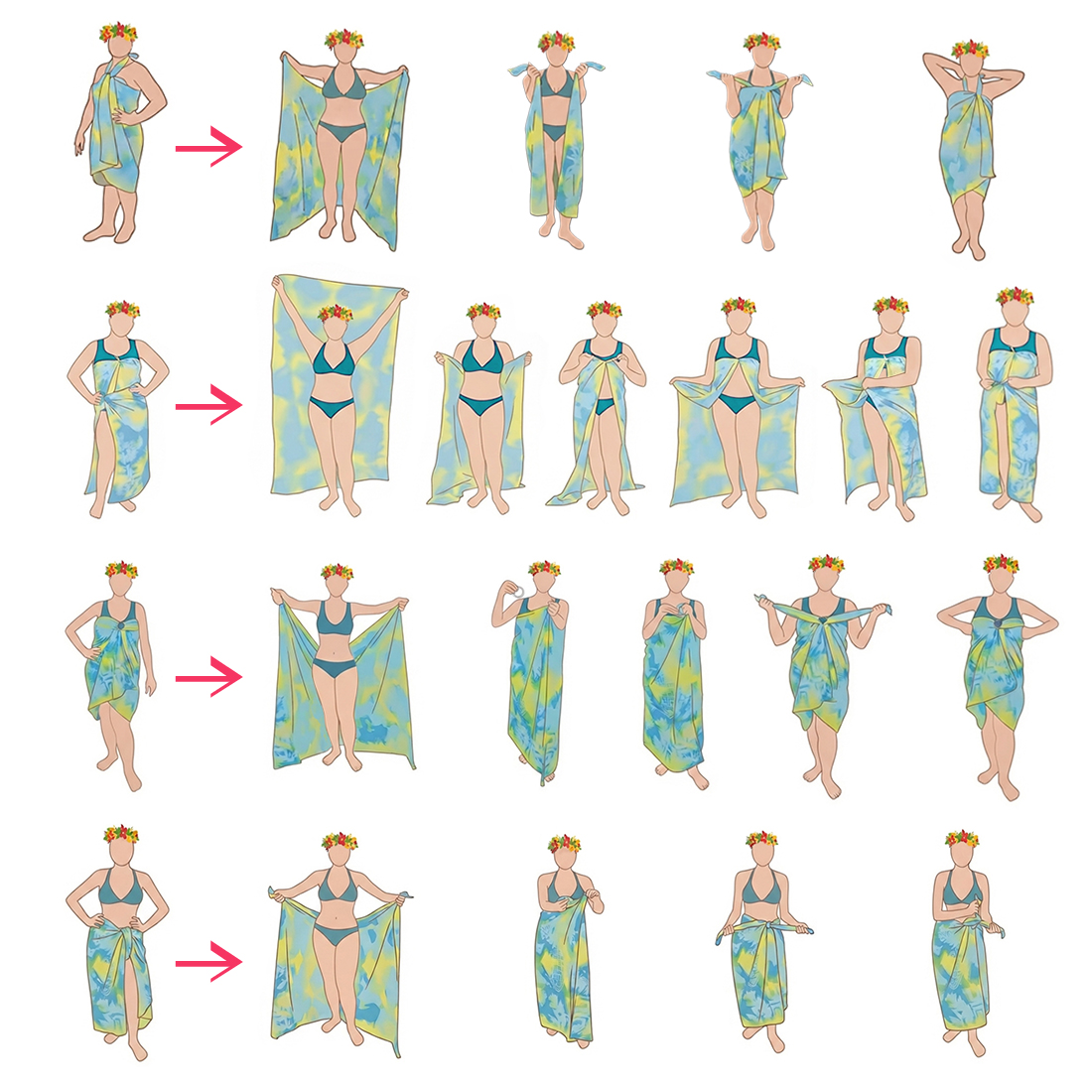
The basic knot is the first technique you should master. It serves as the starting point for most variations and provides good support for everyday wear. To tie a pareo properly, the key is to distribute the fabric evenly around your body.
This knot works very well for quick use at the beach. It also helps create a more defined silhouette without being too tight. In Tahiti, this basic knot remains popular because it moves naturally with the body.
For dancing, a rolled-up pareo is often the best option. It stays in place better during vigorous movement and reduces chafing during quick movements. This style also accentuates the hips and moves more naturally with the body’s rhythm.
To prevent the pareo from twisting or riding up, choose a fabric that is fairly supple but not too slippery. A good fit also depends on how well it fits around the hips. In Tahitian dance, freedom of movement is just as important as how well the garment stays in place.
Length affects both style and practicality. A short sarong creates a dynamic look, while a longer one offers a more dressy appearance. Before making a choice, it’s best to consider how you plan to use it and how the fabric will drape on your body.
For the beach, a medium or long length is comfortable to wear. For dancing, a lighter, less bulky sarong makes it easier to move around. When worn as a dress, the length often creates a more fluid and elegant silhouette.
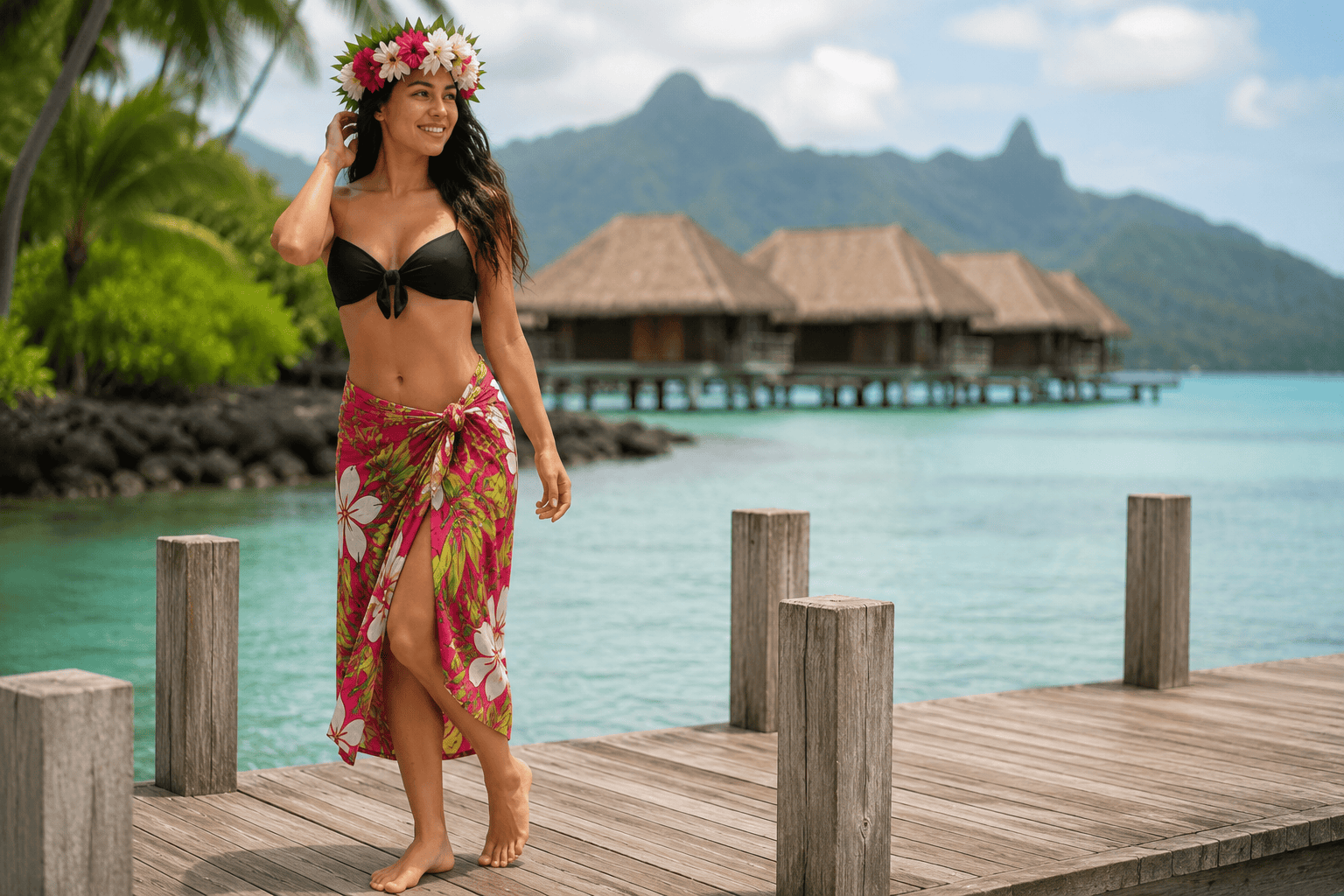
Tying the scarf around the hip remains one of the most flattering ways to wear it. It creates a natural look and works just as well for walking as it does for relaxing in the sun. This style creates an asymmetrical effect that flatters the figure.
To pull off this style, place the fabric slightly askew before tying it. The side tie creates a softer, more dynamic look than a front knot. On a Tahitian sarong, that one detail is often enough to change the whole look.
A pareo can be transformed into a dress in just a few seconds. It’s a practical solution when you want an outfit that offers more coverage without sacrificing lightness. The three most versatile styles are the neck-tied dress, the strapless dress, and the back-crossed dress.
A halter-neck dress is a classic choice—easy to wear and perfect for a day at the beach. The strapless style offers a more chic look and works well for beach outfits. The crisscross-back design gives it a modern feel, with a flattering silhouette around the bust.
For each of these styles, it’s important to distribute the tension in the fabric evenly. A good fit prevents the dress from slipping and improves comfort. Depending on the fabric, the dress will be more flexible or more structured.
The skirt-style pareo remains a timeless classic on the islands. In its long version, it drapes fluidly around the waist. In its short version, it offers a fresher, more practical look—perfect for summer. The sarong style, on the other hand, features a quick, easy-to-wear front tie.
For a long skirt, wrap the fabric around your waist and secure it at the side. For a short skirt, pull the sarong up higher before tying the knot. A sarong tied in the front is especially handy when you want to quickly and effortlessly cover your lower body.
Yes, and these styles are very useful when you want to cover your shoulders. A poncho or light cape protects you from the sun while giving you a more put-together look. The asymmetrical style that drapes over one shoulder adds a more fashionable touch.
These styles work especially well with a fairly soft sarong. They require little effort to put on and instantly give you a different look. In Tahiti, this style is popular for its simplicity and versatility.
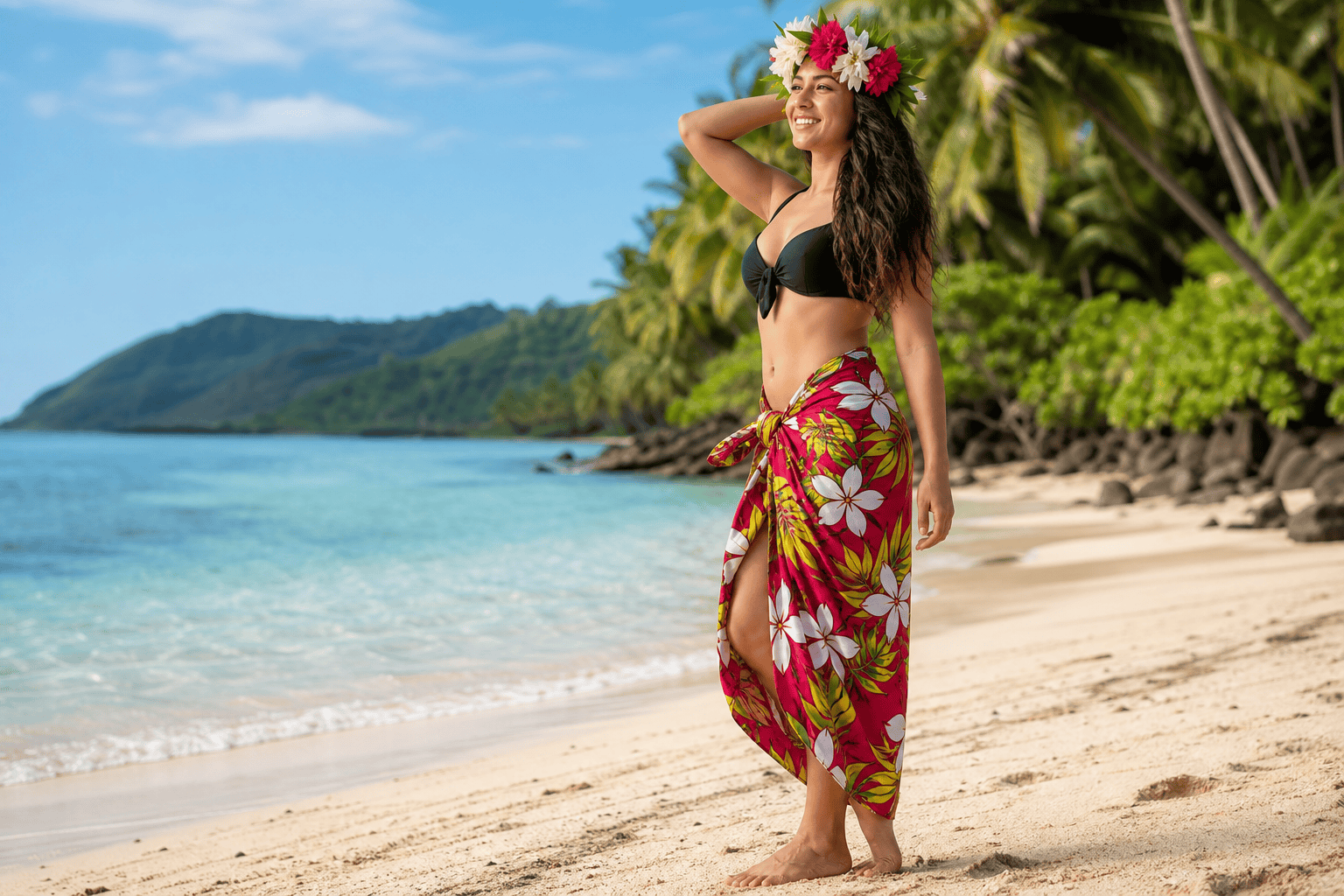
The choice of fabric is essential, especially if you want a good fit. A sarong that’s too slippery will be hard to adjust, while a fabric that’s too heavy will lose its lightness. For Tahitian-style wear, it’s best to choose a fabric that drapes well and moves with your body.
Lighter fabrics are better suited for the beach and everyday use. More textured or slightly thicker fabrics may be a good choice for dance or more elaborate outfits. Before buying, also check the width of the fabric, as it directly affects the tying options.
A pareo isn't just for covering your body. When wrapped correctly, it can also be worn as a turban or a scarf, which is very useful for protection from the sun. This trick works well with lightweight fabric and creates an interesting visual effect in photos.
Simply fold the fabric into a strip, wrap it around your head, and tie the ends together. This style perfectly complements a summer outfit and makes a sarong even more versatile. Whether you’re traveling or in Tahiti, it’s a practical and stylish option.
Learning how to tie a Tahitian pareo is mainly a matter of understanding a few simple basics and adapting them to each use. From the classic knot to the sarong style, as well as dresses and dance outfits, the same piece of fabric can be used in many different ways.
The key is to choose the right pareo, place the fabric in the right spot, and adjust the fit depending on the occasion. With a little practice, these steps become second nature, allowing you to wear the pareo with ease, whether in Tahiti or elsewhere.
 en
en 


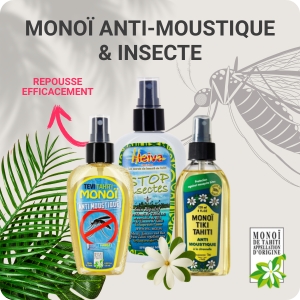
 Comptoir des Monoï
 Monoï Royal de Tahiti
 Reva de Tahiti
 The Tahitian Wave
 NaoNao Xtreme
 Hei Poa
 Monoï Tiki Tahiti
 Tevi Tahiti
 Tahitian Tatou
 Papeete Market Pareo
 Heïva
Heïva South Pacific Ingredients
 Vahine de Tahiti
 Ōteo
Ōteo Bora Bora Sea Salt
 Naturado in Provence
 Teahupoo
 Miss Monoi
 In the Wind of the Islands
 Comptoir des plantes polynésiennes