No products
To be determined Shipping
0,00 € Total
Blog Categories
Latest Posts
The Tahitian pearl captivates with its unique presence, its deep luster, and its palette of natural hues. It is not merely a decorative item; it also embodies a rare artistry, inherited from Tahitian pearl cultivation and the Polynesian lagoons. Each piece has its own unique identity, making it a sought-after choice for a truly remarkable piece of jewelry.
Its appeal stems as much from its beauty as from its diversity. Size, shape, luster, color, surface, and authenticity: there are several criteria used to accurately evaluate a Tahitian pearl. To truly appreciate it, you also need to understand its origin, how it forms, its uses in jewelry, and the best practices for preserving it over time.
Here’s what you need to know to recognize a beautiful pearl, choose the right one, and care for it so it lasts—whether it’s for a pendant, bracelet, necklace, ring, or earrings.
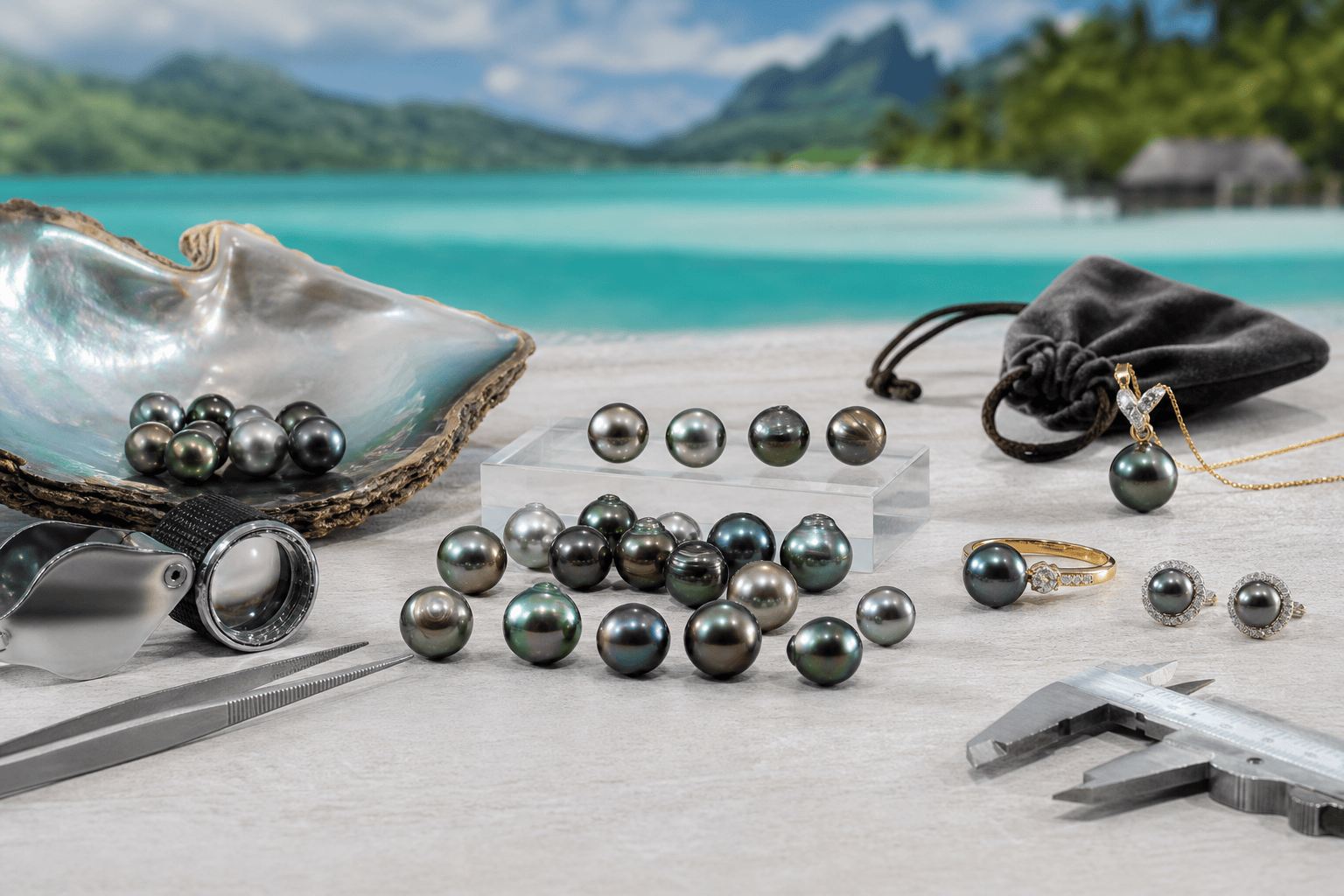
The quality of a pearl is determined by a number of details visible to the naked eye. Professionals first examine the surface condition, then the luster, shape, and overall uniformity. A high-quality pearl has few imperfections, a beautiful luster, and a harmonious pattern of mother-of-pearl.
The surface should be as smooth as possible, although slight natural marks are acceptable. The luster, on the other hand, reveals how light reflects off the nacre. The clearer and more intense the luster, the more vibrant and precious the pearl appears.
The shape has a significant impact on both appearance and price. Round stones are the most sought-after, but they are also rarer. There are also semi-round, oval, teardrop, ring-set, and baroque styles, each with its own unique charm.
Size is measured in millimeters and affects the visual impact of the piece of jewelry. An 8-mm pearl is suitable for a subtle style, while a diameter greater than 12 mm is more eye-catching. In jewelry design, the proportion between the size of the pearl and the setting is essential for achieving a well-balanced look.
Professionals use grading systems to compare pearls. These grades take into account luster, surface uniformity, the orientation of the iridescence, and overall shape. The more uniform a pearl is, the more valuable it becomes.
A well-informed purchase is therefore based on careful observation and the seller’s advice. A beautiful pearl is not just a perfect pearl—it is also one that matches the desired style and the piece of jewelry you have in mind.
Tahitian pearls are known for their deep hues, ranging from black to gray, including shades of green, blue, eggplant, silver, and gold. This diversity is entirely natural, making each pearl a one-of-a-kind creation.
Contrary to popular belief, black is not the only possible shade. Depending on the lighting, the viewing angle, and the quality of the mother-of-pearl, the color may appear to shift subtly. It is this play of color that makes it so appealing, both as a collector’s item and as a piece of luxury jewelry.
The surface luster is not merely an aesthetic detail. It reflects the quality of the nacre layer and the pearl’s ability to capture light. A good luster gives the impression of depth, almost as if the pearl were alive.
When selecting a Tahitian pearl, these iridescent hues are often just as important as the shape. A pearl may appear unremarkable at first glance, but then reveal a remarkable luster when turned in the light. That is when a careful examination becomes essential.
The value of a pearl does not depend solely on its primary color. Secondary hues, sometimes called overtones, enhance its visual appeal. As a result, one may observe effects such as peacock green, silver gray, deep blue, or subtle pink.
The variety of shapes adds to the charm of a Tahitian cultured pearl. The round shape remains the most iconic, but it is not the only one that captivates. Semi-round and oval shapes are highly prized for their balance, particularly in pendants and bracelets.
The teardrop shape, which is more elongated, creates an elegant silhouette that is often ideal for earrings. The baroque shape, on the other hand, stands out for its spontaneous character. Its irregular appearance appeals to those looking for a unique and expressive piece of jewelry.
Ringed pearls feature one or more visible rings around their surface. This natural pattern creates a distinctive and very modern look. They are often chosen for more contemporary designs.
Baroque pearls, for their part, captivate with their unique character. Each pearl is different, giving the jewelry an almost sculptural presence. In a collection, they add a touch of originality without detracting from the material’s precious nature.
The choice depends on the desired effect. A round shape is perfect for a classic setting, while a teardrop shape enhances a pendant or a pair of earrings. For a bracelet, semi-round or oval shapes often provide greater visual appeal.
A genuine Tahitian pearl comes from pearl farming in Polynesia, in a very specific marine environment. The oyster used, Pinctada margaritifera, produces this mother-of-pearl with its unique iridescence. Geographical origin remains a key factor in confirming authenticity.
A reputable seller should be able to provide proof of traceability, a certificate, or clear information about the pearl’s origin. This transparency reassures the buyer and helps distinguish a genuine pearl from an imitation or a pearl that has been treated too aggressively.
An imitation often looks too uniform, lacking depth and natural variations. In contrast, a genuine Tahitian cultured pearl displays vibrant iridescence, an organic surface, and a richer visual character.
Touching the item and examining it under light can also help you spot differences. If the finish looks artificial or too smooth, it’s best to seek professional advice before finalizing the purchase.
Before making a purchase, check to see if there is a description of the item, a statement of origin, and a certificate, if necessary. The delivery should include detailed information about the piece, how to put it on, and how to care for it. These guarantees are especially important for jewelry that is meant to be worn for a long time.
Pearls remain a delicate material, even when they appear sturdy. To preserve their quality, avoid contact with perfumes, cosmetics, chemicals, and extreme heat. Over time, these factors can damage the nacre.
After wearing it, simply wiping it down with a soft cloth is usually sufficient. It is also recommended to store the piece separately to prevent it from rubbing against other jewelry. Regular care helps preserve its luster and natural sheen.
Contrary to popular belief, wearing a pearl from time to time is often good for it. The natural contact with the skin helps maintain its luster. However, you should avoid sudden movements and activities that expose the jewelry to impact.
A pendant or ring will stay in great condition if you follow these simple tips. Just a few seconds of care is often enough to keep a piece looking beautiful for many years.
Certain behaviors can damage mother-of-pearl faster than you might think. It’s best to remove your jewelry before showering, exercising, or doing household chores. This limits exposure to hot water, abrasive products, and scratches.
Tahitian pearls come from the lagoons of Polynesia, where pearl oysters thrive in exceptional marine conditions. The Tuamotu and Gambier atolls are particularly well known for pearl farming. The natural environment plays a direct role in the rich variety of shades produced.
Tahitian culture is based on specific expertise that has been passed down and refined over time. Pearl farmers oversee the growth of the oysters, monitor the grafting process, and harvest the pearls while respecting the mollusks’ natural life cycle.
Pearl farming involves technically demanding processes. Implantation, monitoring in the lagoon, and harvesting all require patience and precision. This labor-intensive process partly explains why certain pieces are so rare and highly sought after.
In France, interest in these creations remains strong, particularly in contemporary jewelry and exceptional pieces. The Tahitian pearl thus holds a special place in the world of French and international jewelry.
Tahitian pearls can be easily incorporated into many types of jewelry. The pendant with a Tahitian pearl It remains one of the most elegant settings, as it keeps the pearl front and center. The bracelet and ring, on the other hand, require a more careful selection of shape and diameter.
Earrings are also highly sought after, especially when they feature small, well-proportioned pearls. In any case, the setting should highlight the piece without overwhelming it.
A round pearl often calls for a simple, refined design. A baroque pearl, on the other hand, can become the focal point of a bolder piece of jewelry. The goal is to respect the pearl’s identity without overshadowing it.
A well-designed pearl piece of jewelry highlights light, line, and volume. This is especially true for pendants and earrings, where movement accentuates the shimmer.
Giving a Tahitian cultured pearl remains a meaningful gesture, often associated with a special occasion. A pendant, ring, or bracelet may be appropriate, depending on the person’s style and the message you wish to convey. Each piece gains emotional value when it is chosen with care.
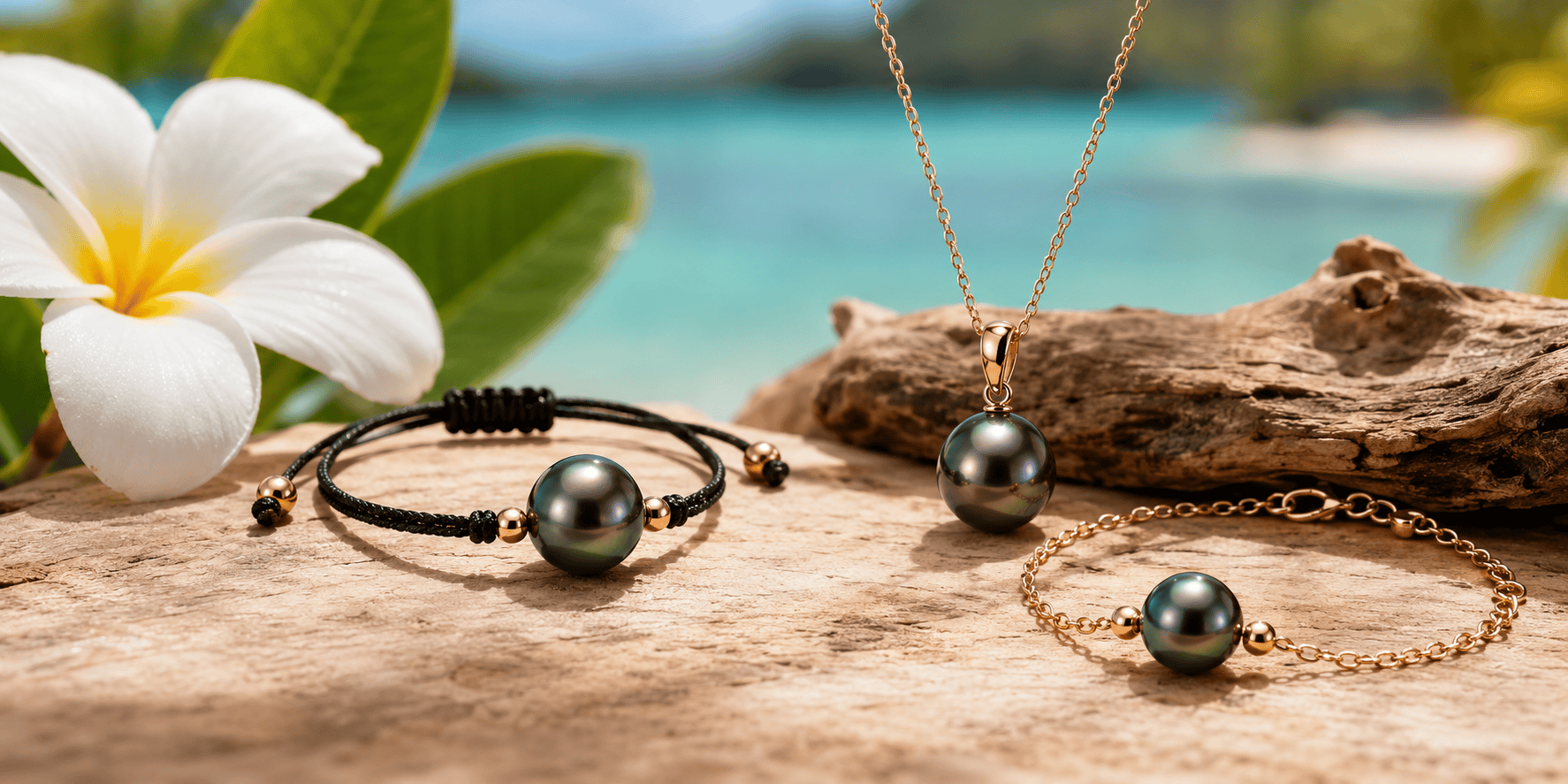
The price depends on a combination of several factors: shape, size, surface quality, luster, color, and rarity. A perfectly round pearl with a beautiful pearlescent sheen and a large diameter is often in a higher price range. Conversely, a simpler pearl can remain affordable while still being visually appealing.
The settings also influence the final value. Adding silver, gold, or gemstones can transform how the piece is perceived and enhance its uniqueness. The quality of the jewelry craftsmanship is just as important as the pearl itself.
A rare pearl isn't necessarily the largest one, but rather the one that combines several exceptional qualities. The harmony between shape, color, and luster plays a major role. It is this harmony that attracts both collectors and discerning enthusiasts.
Expert reviews remain invaluable for assessing the value of a purchase. They help you better understand what justifies a price difference and guide you toward a product that will provide long-term satisfaction.
Before making a decision, you should consider whether the pearl will be worn every day, reserved for a special occasion, or added to a collection. A pendant often calls for a more understated look, while a ring or earrings can handle a more striking design.
Your budget, personal style, and how often you’ll wear it naturally influence your choice. A beautiful pearl isn’t necessarily the most expensive one—it’s the one that best suits your needs.
It’s a good idea to examine a pearl from various angles before buying it. Light reveals its luster, any imperfections, and the depth of the nacre. This simple step helps you make a more confident and satisfying choice.
If you like several styles, compare their luster, consistency, and how they look when worn. A visual comparison often helps you find the piece that looks best.
A successful pearl combines beauty, balance, and authenticity. Technical details matter, but the overall impression is what really counts. It is this harmony that transforms a simple marine gem into a true collector’s item.
If you're unsure, a professional's advice can help you decide between several options. This helps you avoid impulse purchases and ensures that you give or wear a piece of jewelry that's truly the right fit.
Tahitian pearls captivate with their origin, diversity, and natural luster. From surface quality to color, shape, luster, and authenticity, every detail matters when it comes to understanding their value and choosing the right piece. Their charm also stems from a precise cultivation process that is intimately linked to the lagoons of Polynesia.
Whether set as a pendant, bracelet, ring, or earrings, it remains a unique creation, capable of standing the test of time with elegance. By taking the time to compare, observe, and care for your jewelry, you can fully enjoy all the beauty that Tahitian pearls have to offer.
 en
en 




 Comptoir des Monoï
 Monoï Royal de Tahiti
 Reva de Tahiti
 The Tahitian Wave
 NaoNao Xtreme
 Hei Poa
 Monoï Tiki Tahiti
 Tevi Tahiti
 Tahitian Tatou
 Papeete Market Pareo
 Heïva
Heïva South Pacific Ingredients
 Vahine de Tahiti
 Ōteo
Ōteo Bora Bora Sea Salt
 Naturado in Provence
 Teahupoo
 Miss Monoi
 In the Wind of the Islands
 Comptoir des plantes polynésiennes